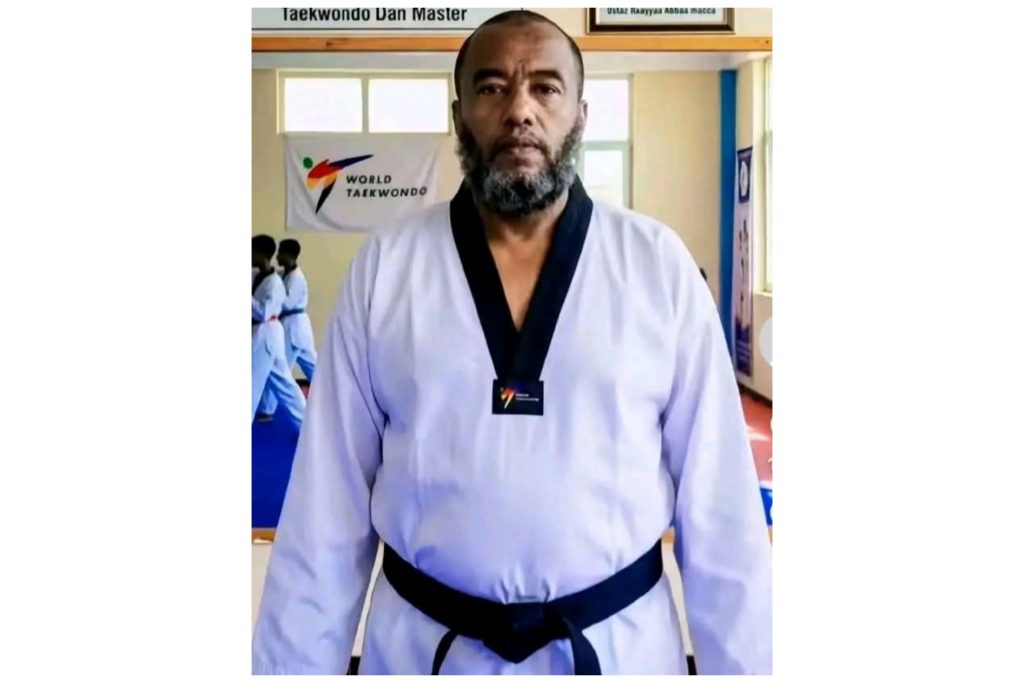
Ustaaz Raayyaa Abbaa Maccaa — An Expanded Historical Profile
Ustaaz Raayyaa Abbaa Maccaa is one of the most influential figures in modern Oromo religious and cultural music. A master of Manzuma (Oromo Islamic devotional poetry/song), he is widely respected not only as a singer, but as a teacher, poet, moral voice, and community advocate whose work bridges faith, identity, and social conscience.
Over more than three decades, he has released 30+ albums and hundreds of individual Manzuma pieces that circulate through mosques, homes, buses, marketplaces, weddings, youth gatherings, and, more recently, social media platforms. His voice has become part of the soundscape of everyday Oromo life.
Early Life and Background (c. 1972 – Rural Gomma, Jimma Zone)
Raayyaa was born around 1972 in the Gomma district of Jimma Zone, in a rural setting marked by economic hardship and limited access to formal education. Like many Oromo children of that era, he grew up within:
- Strong oral traditions (poetry, proverb, chant, rhythm)
- Deep Islamic learning through local scholars and mosques
- A sociopolitical environment shaped by marginalization of Oromo language and identity
These three elements—oral culture, Islamic education, and Oromo struggle—would later define his artistic and moral voice.
As a child and youth, he was exposed to traditional Oromo poetic forms and Qur’anic learning simultaneously. This dual influence later matured into his signature style: religious teaching delivered through Oromo poetic expression.
Youth and Involvement in the Oromo Struggle
During his youth, Raayyaa lived through a period when many Oromo young people were drawn into the Oromo liberation struggle. Historical accounts note that he had involvement with the Oromo freedom movement before later redirecting his life toward religious teaching.
This period was pivotal. It shaped:
- His awareness of injustice
- His empathy for the suffering of ordinary people
- His deep concern for dignity, rights, and identity
However, rather than continuing through armed or political means, Raayyaa gradually chose a different path:
From armed struggle to moral and spiritual struggle.
He began to see that the hearts, minds, and morals of the people needed healing and guidance as much as political change.
Transition to Islamic Teaching and Manzuma
After this turning point, Raayyaa committed himself to:
- Studying and teaching Islamic knowledge
- Using Manzuma as a vehicle for da’wah (religious outreach)
- Reviving Oromo language as a medium for Islamic expression
At a time when much Islamic teaching in Ethiopia was delivered in Arabic or Amharic, Raayyaa insisted on Afaan Oromoo. This was culturally revolutionary. He demonstrated that:
Oromo language is fully capable of carrying deep Islamic scholarship, spirituality, and poetic beauty.
His Manzuma became mobile classrooms.
The Rise of a Cultural-Religious Icon
From the 1990s onward, his recordings spread widely in cassette form, later CDs, memory cards, Bluetooth transfers, and now YouTube and Facebook.
His works are heard in:
- Mosques before and after lessons
- Public transport across Oromia
- Oromo households as moral teaching for children
- Youth gatherings as inspiration and identity reinforcement
He is not merely listened to—he is trusted.
Themes in His Work
Raayyaa’s Manzuma is distinctive because it blends multiple layers:
1. Islamic Faith and Spirituality
- Tawheed (oneness of Allah)
- Love of the Prophet (PBUH)
- Moral conduct
- Patience, humility, and repentance
2. Oromo Identity and Dignity
- Pride in language and culture
- Respect for elders and tradition
- Defense of Oromo dignity
3. Social Commentary
- Critique of injustice and oppression
- Warnings against moral decay
- Advice to youth about drugs, violence, and hopelessness
4. Unity and Peace
- Calls for brotherhood
- Reconciliation within communities
- Moral reform as the path to social reform
Poetic and Musical Style
What sets Raayyaa apart is not only what he says, but how he says it.
- His words are deeply poetic, often resembling classical Oromo oral poetry.
- His rhythm is calm, reflective, and meditative rather than entertaining.
- His delivery feels like a sermon wrapped in melody.
Listeners often describe his Manzuma as:
“Not songs, but messages for the soul.”
Social Media and Modern Reach
In recent years, Raayyaa has embraced digital platforms:
- YouTube channel with official releases
- Facebook presence for followers
- Recordings shared widely across Oromia and the diaspora
This has introduced his legacy to a new generation who may never have used cassettes but now memorize his Manzuma from smartphones.
Historical Significance
In the broader history of Oromo cultural expression, Raayyaa Abbaa Maccaa occupies a unique place:
| Area | His Contribution |
|---|---|
| Religion | Made Islamic teaching accessible in Afaan Oromoo through art |
| Culture | Preserved Oromo poetic tradition in modern form |
| Society | Addressed real community issues through moral voice |
| Identity | Linked Islam and Oromo identity harmoniously |
| Youth | Redirected many toward faith, discipline, and purpose |
He represents a rare figure who successfully merged advocacy with faith without politicizing religion or secularizing culture.
Legacy
Raayyaa’s legacy is living and ongoing. He is regarded as:
- A teacher without a classroom
- A poet without a book
- A preacher without a pulpit
- A reformer without an office
Yet his influence reaches millions.
For many Oromo Muslims, his Manzuma was their first exposure to Islamic knowledge in their own language.
Conclusion
Ustaaz Raayyaa Abbaa Maccaa is more than a Manzuma artist. He is a historical bridge:
- Between struggle and spirituality
- Between culture and religion
- Between past oral tradition and modern media
- Between identity and morality
Listening to Raayyaa is not simply listening to music.
It is listening to history, faith, poetry, and conscience speaking together.
Seenaa Ustaaz Raayyaa Abbaa Maccaa
Ustaaz Raayyaa Abbaa Maccaa maqaa guddaa addunyaa Manzuma Afaan Oromoo keessatti beekamu dha. Inni sirbaa qofa miti; inni barsiisaa, walaleessaa, dammaqisaa hawaasaa, fi sagalee ummataa dha. Hojii isaa keessatti amantii, aadaa, eenyummaa, fi rakkoo hawaasaa walitti makuun dhaamsa cimaa dabarsa.
Albamoota isaa 30 ol gadhiisee jira; Manzuma isaa ammoo mana, masjiida, konkolaataa imalaa, gabaa, cidha, walga’ii dargaggootaa fi amma miidiyaa hawaasaa irratti bal’inaan dhaggeeffama.
Dhaloota fi Jireenya Jalqabaa (Naannoo 1972 – Gommaa, Jimmaa)
Raayyaan naannoo bara 1972tti godina Jimmaa, aanaa Gommaa keessatti dhalate. Jireenyi isaa baadiyyaa rakkina dinagdee fi hanqina barnootaa keessa ture. Garuu naannoon inni keessatti guddate:
- Aadaa afoola Oromoo (walaloo, mammaaksa, sirna jechootaa)
- Barnoota Islaamaa karaa masjiidaa fi sheekota
- Haala siyaasa yeroo sanaa kan eenyummaa Oromoo cunqursu
Kun hundi bu’uura sagalee fi yaada isaa ta’e.
Yeroo Dargaggummaa fi Qabsoo
Yeroo dargaggummaa isaa keessatti, Raayyaan qabsoo bilisummaa Oromoo keessatti hirmaatee ture jedhama. Yeroon sun qalbii isaa keessatti:
- Hubannoo hacuuccaa
- Jaalala ummataa
- Fedhii kabaja namaa
jabeesse. Garuu boodarra murtee guddaa fudhate:
Qabsoo hidhannoo irraa gara qabsoo qalbii fi sammuutti ce’e.
Inni hubate ummanni sirna qofa osoo hin taane, qalbii fi safuu akka barbaadu.
Gara Barsiisa Islaamaa fi Manzumaatti Jijjiirama
Boodarra Raayyaan of kennuu jalqabe:
- Barachuu fi barsiisuu Islaamaa
- Manzuma akka karaa da’waaatti fayyadamuu
- Afaan Oromoo keessatti beekumsa amantii babal’isu
Yeroo baay’ee barsiisni amantii Afaan Arabaa ykn Amaaraa keessatti kennamaa ture. Raayyaan garuu:
Afaan Oromoo akka meeshaa guddaa barsiisa Islaamaa taasisuu filate.
Kun jijjiirama aadaa fi amantii keessatti guddaa ture.
Ka’umsa Beekamtii fi Tamsa’ina Hojii Isaa
Bara 1990moota irraa eegalee, Manzuma isaa kaaseetiin, CD, memory card, Bluetooth, amma immoo YouTube fi Facebook irratti babal’ate.
Har’a Manzuma isaa dhaggeeffachuun:
- Mana keessatti barnoota ta’a
- Masjiida keessatti qophii ta’a
- Dargaggootaaf kaka’umsa ta’a
- Maatii keessatti gorsa ta’a
Ummanni isa dhaggeeffata qofa miti — amana.
Mata Dureewwan Inni Irratti Hojjatu
1. Amantii Islaamaa
- Tokkummaa Rabbii
- Jaalala Ergamaa Rabbii (SAW)
- Safuu, obsa, qalbii qulqulluu
2. Eenyummaa Oromoo
- Kabaja afaanii
- Aadaa fi duudhaa
- Kabaja maanguddoo
3. Rakkoo Hawaasaa
- Hacuuccaa fi cunqursaa balaaleffata
- Dargaggoota irraa badii akka fagaatan gorsa
- Safuu fi naamusa barsiisa
4. Tokkummaa fi Nagaa
- Obbolummaa waama
- Araara fi waliigaltee jajjabeessa
Akkaataa Walaloo fi Sagalee Isaa
Raayyaan jechoota isaa akka walaloo sirrii qopheessa. Sirbi isaa bashannana miti; xiinxala sammuu fi qalbii dha.
Namoonni hedduun akkana jedhu:
“Manzuma isaa sirba miti; dhaamsa lubbuu dha.”
Gahee Miidiyaa Hawaasaa
Yeroo ammaa:
- YouTube irratti Manzuma haaraa gadhiisa
- Facebook irratti hordoftoota hedduu qaba
- Dhaloota haaraa bira gahaa jira
Kanaaf hojii isaa bara kaaseetii irraa gara bara dijitaalaa ce’eera.
Bakka Seenaa Keessatti Qabu
Seenaa aadaa fi amantii Oromoo keessatti Raayyaan bakka addaa qaba:
| Damee | Gahee Isaa |
|---|---|
| Amantii | Islaamummaa Afaan Oromoo keessatti ibse |
| Aadaa | Aadaa walaloo Oromoo tiksuu |
| Hawaasummaa | Rakkoo ummataa irratti dubbachuu |
| Eenyummaa | Oromummaa fi Islaamummaa walitti fiduu |
| Dargaggoota | Kallattii jireenyaa agarsiisuu |
Dhaala Isaa (Legacy)
Raayyaan:
- Barsiisaa mana barumsaa hin qabne
- Lallabaa minbar hin qabne
- Walaleessaa kitaaba hin barreessine
Garuu hojii isaa miiliyoonota bira ga’eera.
Namoota hedduuf Manzuma isaa:
Barnoota Islaamaa jalqabaa Afaan isaanii keessatti ta’eera.
Xumura
Ustaaz Raayyaa Abbaa Maccaa seenaa keessatti nama:
- Qabsoo irraa gara barsiisaatti ce’e
- Aadaa fi amantii walitti hidhate
- Sagalee isaa dhaamsa godhate
Manzuma isaa dhaggeeffachuun sirba dhaggeeffachuu miti.
Seenaa, amantii, walaloo, fi dammaqina qalbii dhaggeeffachuu dha.